


Transportable optical clocks for key comparisons (TOCK)
Projects
Transportable optical clocks for key comparisons (TOCK)
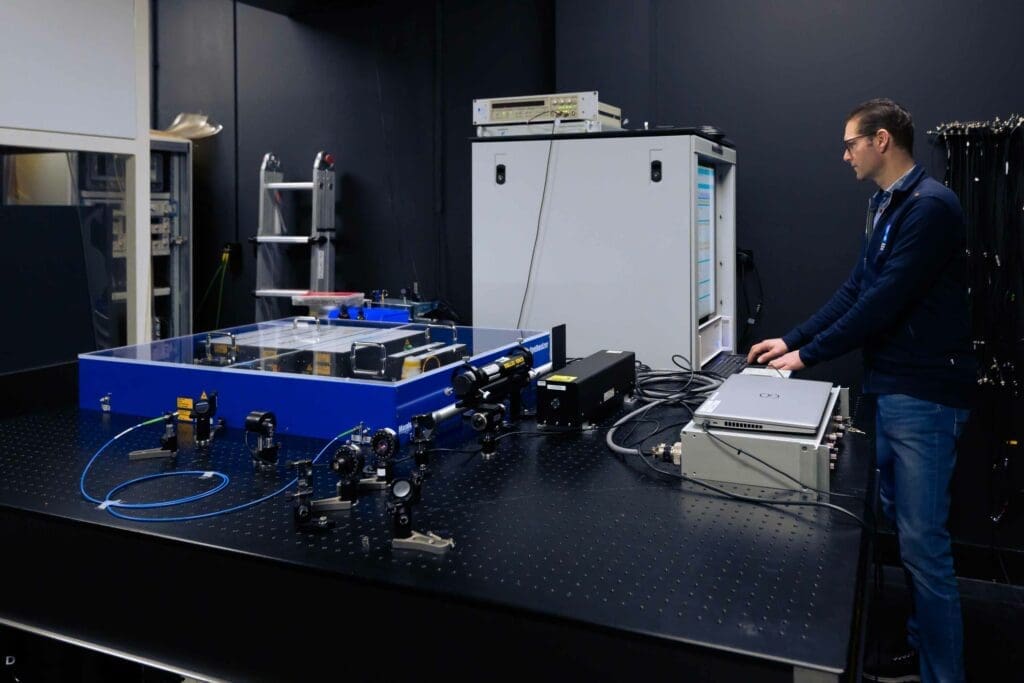
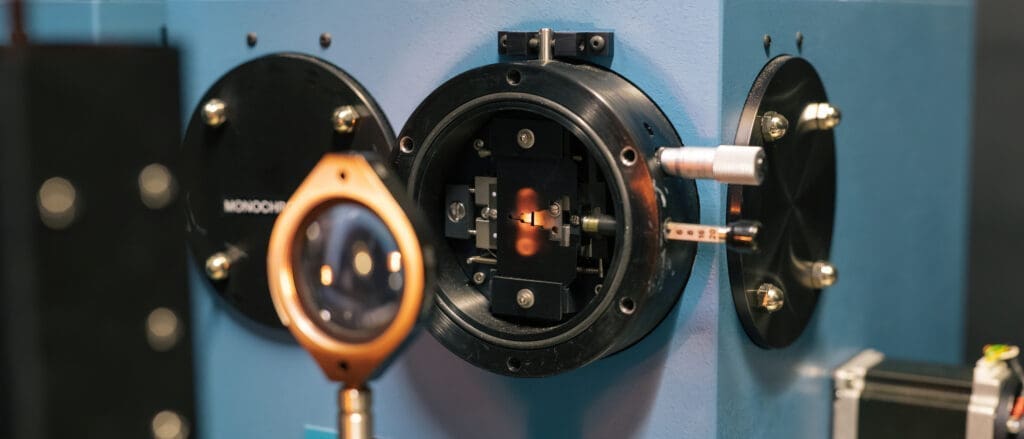
The availability of SI-traceable time and frequency references for end users in research laboratories or industry is at the heart of many applications, from fundamental science and metrology to high-speed telecommunications, satellite navigation systems and environmental monitoring. Progress in the realisation of time and the SI base unit second with ever-improving atomic clocks is therefore expected to have widespread impact on science, innovation and daily life. The development of highly precise optical clocks has made great progress with a variety of different reference systems with neutral atoms and single ions. Significant progress with optical clocks has been achieved and they clearly outperform current primary standards of time and frequency. The latter are compared with 10−16 fractional uncertainty using satellite-based time and frequency transfer techniques to provide international consistency. Optical fibre links between a few national metrology laboratories in Europe enable frequency comparisons with low 10−18 uncertainty limited by relativistic effects. To overcome these limitations and to compare optical clocks that cannot be interconnected via optical fibre links, especially on an intercontinental basis, traveling frequency standards with performance exceeding the current state-of-the-art need to be developed, evaluated, and employed. The proposed research will provide a metrology solution to enable comparisons of high-performance clocks between all European NMIs, research institutes and service providers operating frequency standards. Besides the impact on regulatory bodies and the potential support of fundamental research, transportable optical clocks will have impact on technological applications, in sectors such as space, aerospace, telecommunications and energy networks.
Our role
VSL will work on the evaluation of the frequency accuracy of the optical clock developed at UvA. Based on this, a first evaluation will be carried out of the frequency accuracy of the optical clock in Amsterdam. Moreover, VSL will be the work package leader of the impact work package (WP5).
Start date: May 1, 2023
End date: April 30, 2026

Would you like to know more about our services?
Our experts are happy to help.
Erik Dierikx
Principal Scientist Electricity & Time
Projects
Our expertise in practice
Read more about our projects

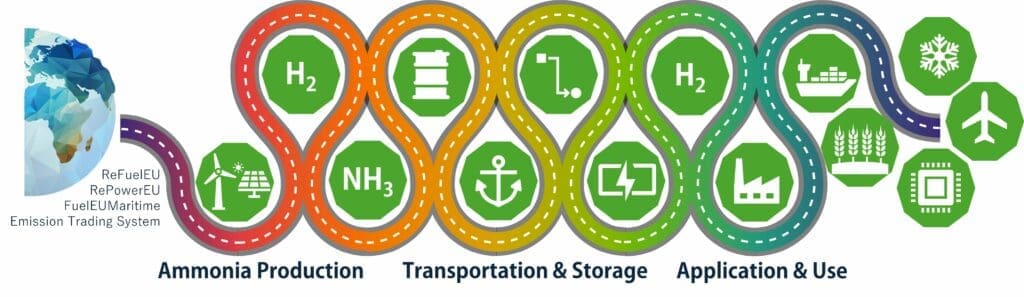
Metrology for Ammonia as an Energy Carrier
Given its higher volumetric energy density compared to hydrogen, ammonia is expected to play a significant role in long-term energy storage. To ensure a safe and fair rollout of ammonia as an energy carrier, it is essential to establish infrastructure for measuring quantity, quality, and emissions.

Metrology for Hydrogen Vehicles 3
This project focuses on developing faster methods for hydrogen flow calibrations (using master meters), combining flow calibrations with sampling for quality measurements, creating test protocols for gas composition sensors, and investigating potential new impurities.