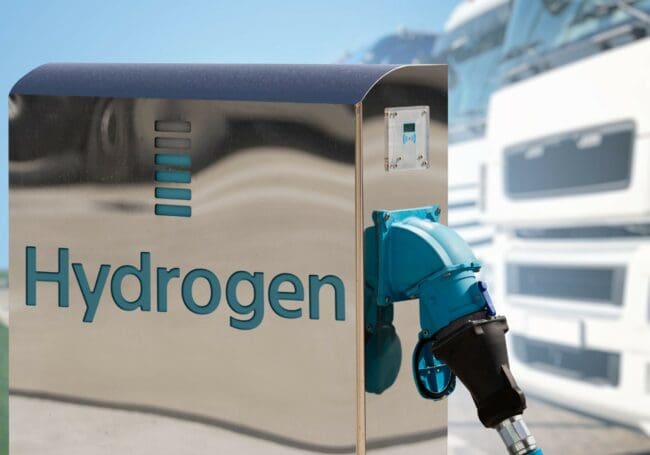

Metrology for the hydrogen supply chain (Met4H2)
Creating a metrological framework to support growing demands for ‘green’ hydrogen as part of the EU’s climate strategy.
This project focuses the development of traceable measurement methods for high throughput nanodimensional characterisation of NW energy harvesters.
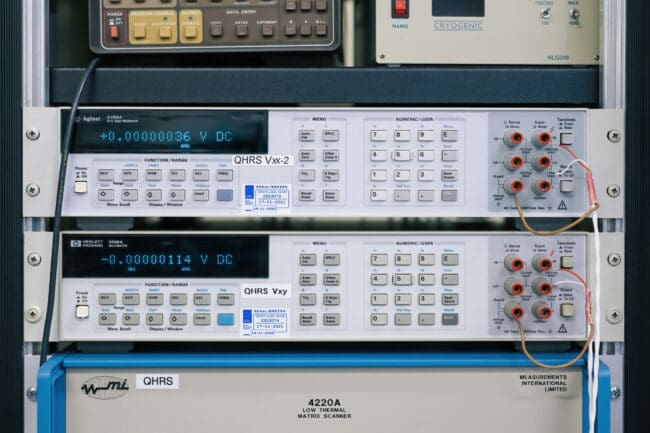
This project addresses the development of a digitizer based on state-of-the-art analog-to-digital converters (ADCs), operating from direct current (DC) to 100 kHz, meeting the demands for linearity, noise, and overall accuracy of high-level measurement applications that cannot be met using currently available digitizers.
This project will deliver accessible traceability to the stakeholder community by developing efficient and cost-effective methods for the preparation of traceable gas transfer standards for the performance evaluation of biomethane monitoring systems.
This project will focus on the development of the metrology infrastructure required for monitoring CO2 produced and lost within an industrial process through the development of new traceable facilities, including primary flow standards to enable calibration, as well as validation of systems capable of quantifying CO2 leaks from pipelines, transport (e.g. shipping) or storage sites.
The Federal Institute of Metrology METAS developed a Hydrogen Field Test Standard (HFTS) that can be used for field verification and calibration of hydrogen refuelling stations.
Global warming is one of the greatest current risks to humanity. As outlined in the Paris Agreement, and confirmed in the IPCC AR6 WG1 Climate Report released last August 2021, there is an urgent need for action tackling climate change, by reducing greenhouse gases emissions such as methane and carbon dioxide.
The European “Green Deal” sets out a roadmap for the greening of energy flows and a climate-neutral EU.